
In September, two members of the Young Mobility Network, Sarah Peters and Tejas Patel, joined Katja Diehl’s “Learn & Travel” delegation to Graubünden, Switzerland. This area is the largest canton by area and the least densely populated. This setting presents a few mobility and connection challenges: it is easy to imagine how difficult it is to maintain schools, hospitals and other basic public services in the most remote valleys.
Katja Diehl, mobility expert and activist, was guide and organizer of this trip, which allowed us to study and actually experience different types of mobility.
Our three-day trip started in Thusis, with a walk towards the Viamala Gorge in the direction of Rongellen. Over three days we met people who are shaping the mobility transition and we explored six modes of transport: cableway, bus, train, bike, feet and car. As Katja puts it: no secret ingredients but clear decisions.
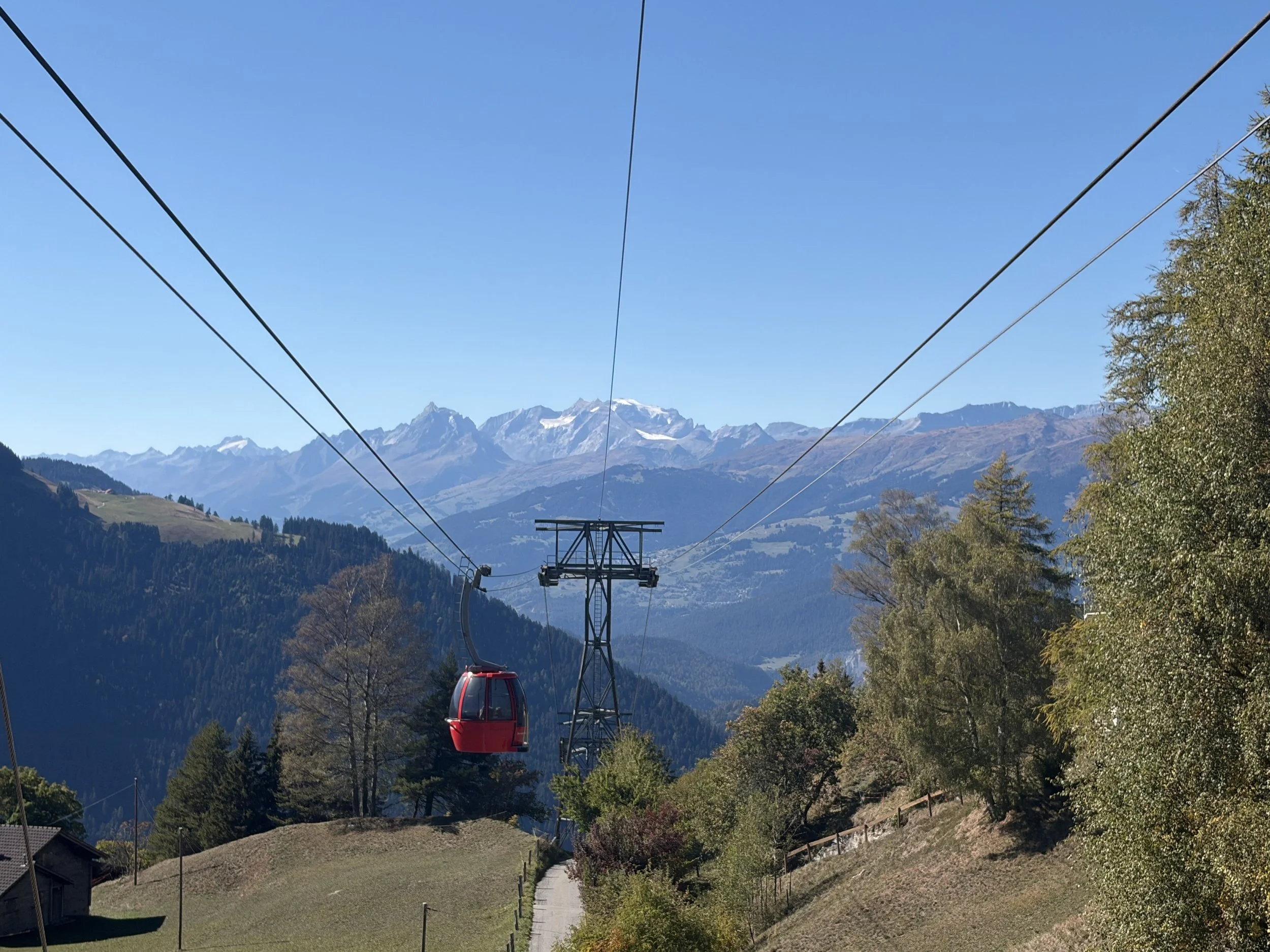
The cableway: Rhäzüns
Our first day started with an uncommon mode of transport: the cableway. This is the only one in the area that is actually integrated into the public transport system. This way to move, connected with the bus lines, thanks to the coordinated cableway schedule, allows many of the inhabitants to leave the car home - or not even own one.
To end a very interesting day, we met Remi Crameri, mayor of Thusis since April 2026 and discussed the transport challenges facing the canton.
Bus: PostBus
As we saw, Graubünden has to consider small and remote villages when planning the bus routes, and in most cases, the transportation system works well. According to local rules, even villages of around a hundred inhabitants, and in some cases fewer, are entitled to a basic public transport service. The main bus operator in the area is PostBus.
Those buses are not only for residents. In 2025 the Swiss canton recorded about 5.7 million overnight stays, its best result since 2010. Tourism multiplies traffic, but not only because of private cars. Switzerland is one of the most popular destinations for hiking and for exploring the mountains by bike. More than 65,000 bicycles are transported by bus every year, and reservations are now required.
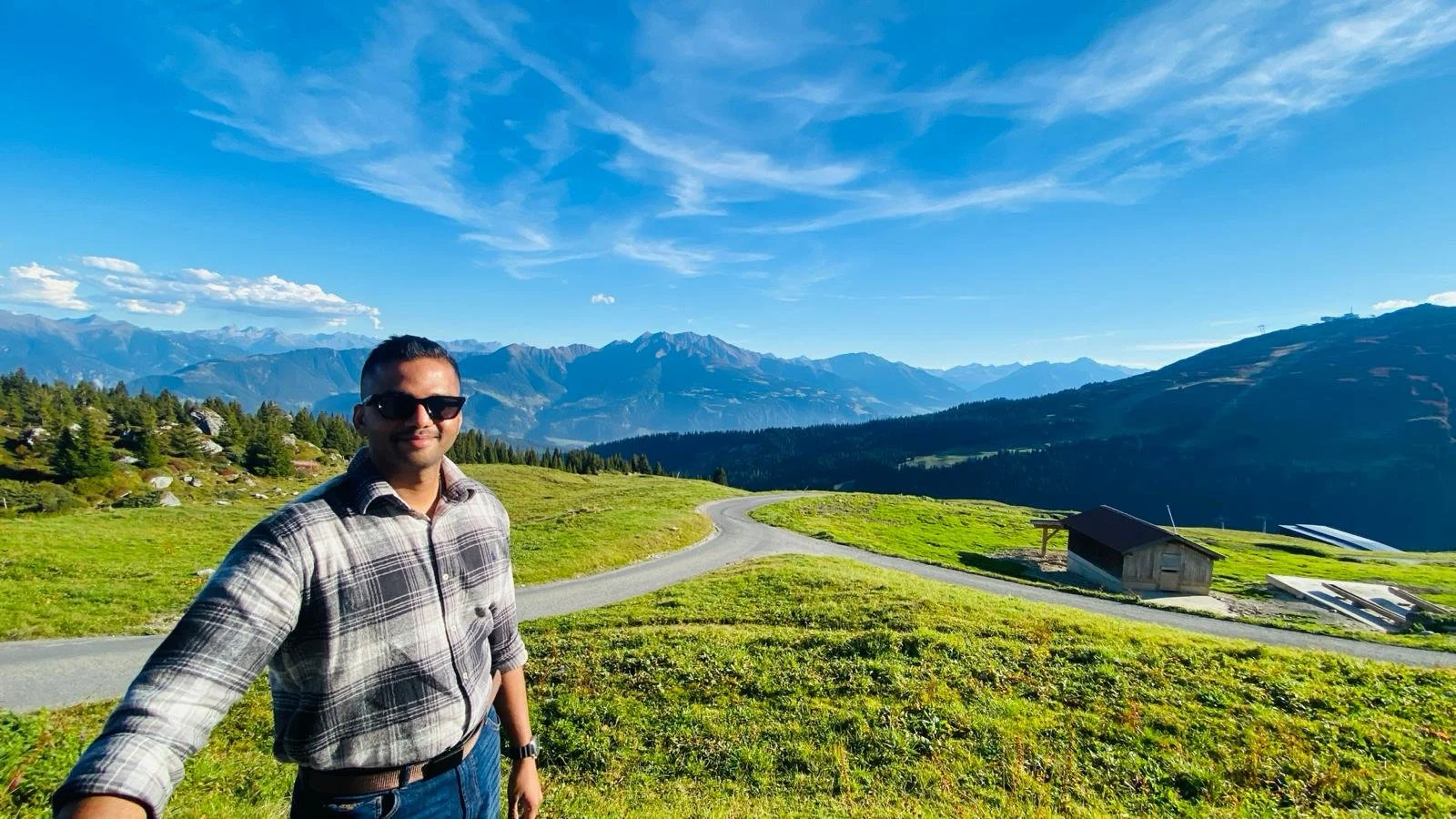
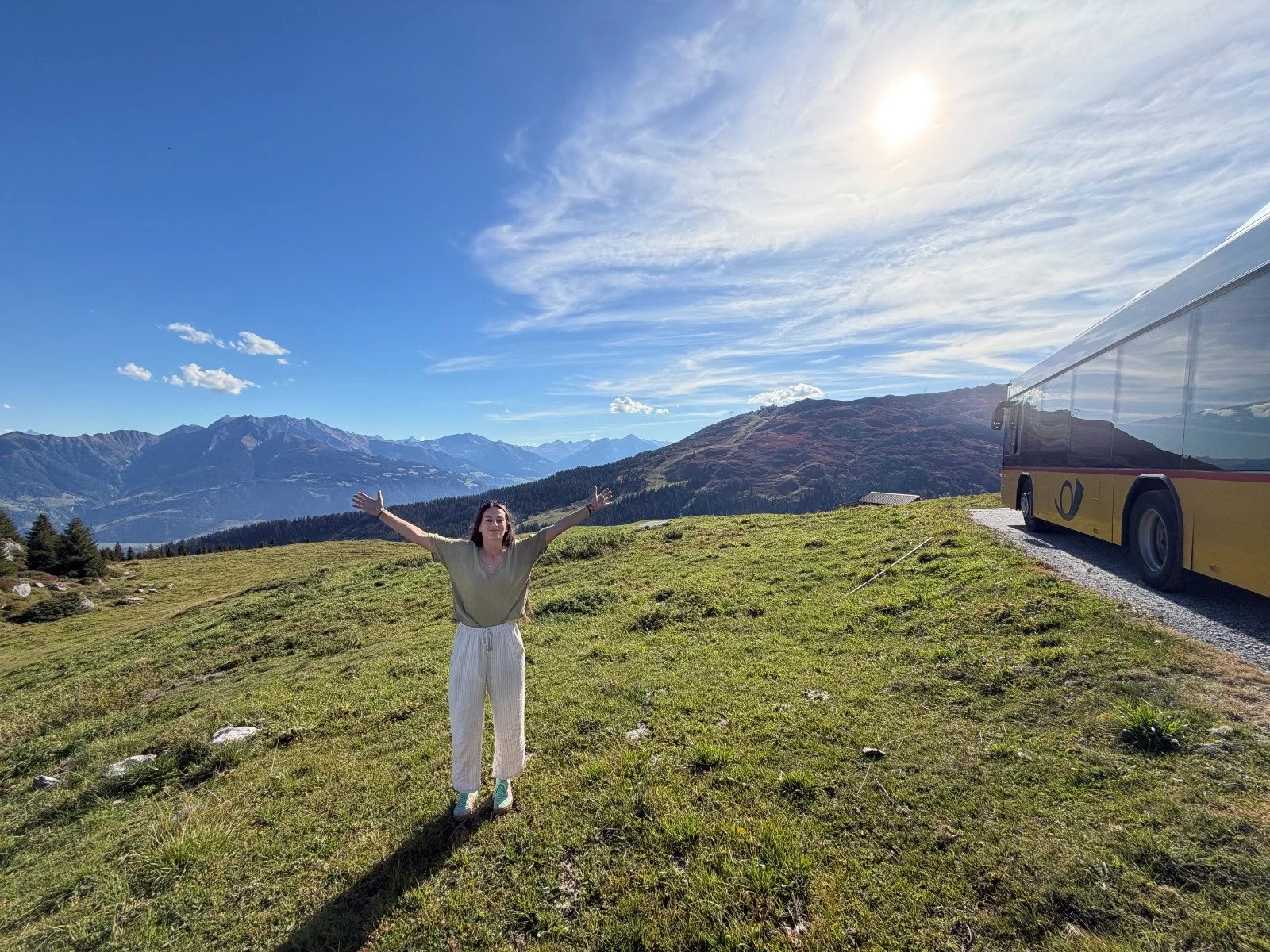
Say hi to Sarah and Tejas!
Train: Rhätische Bahn
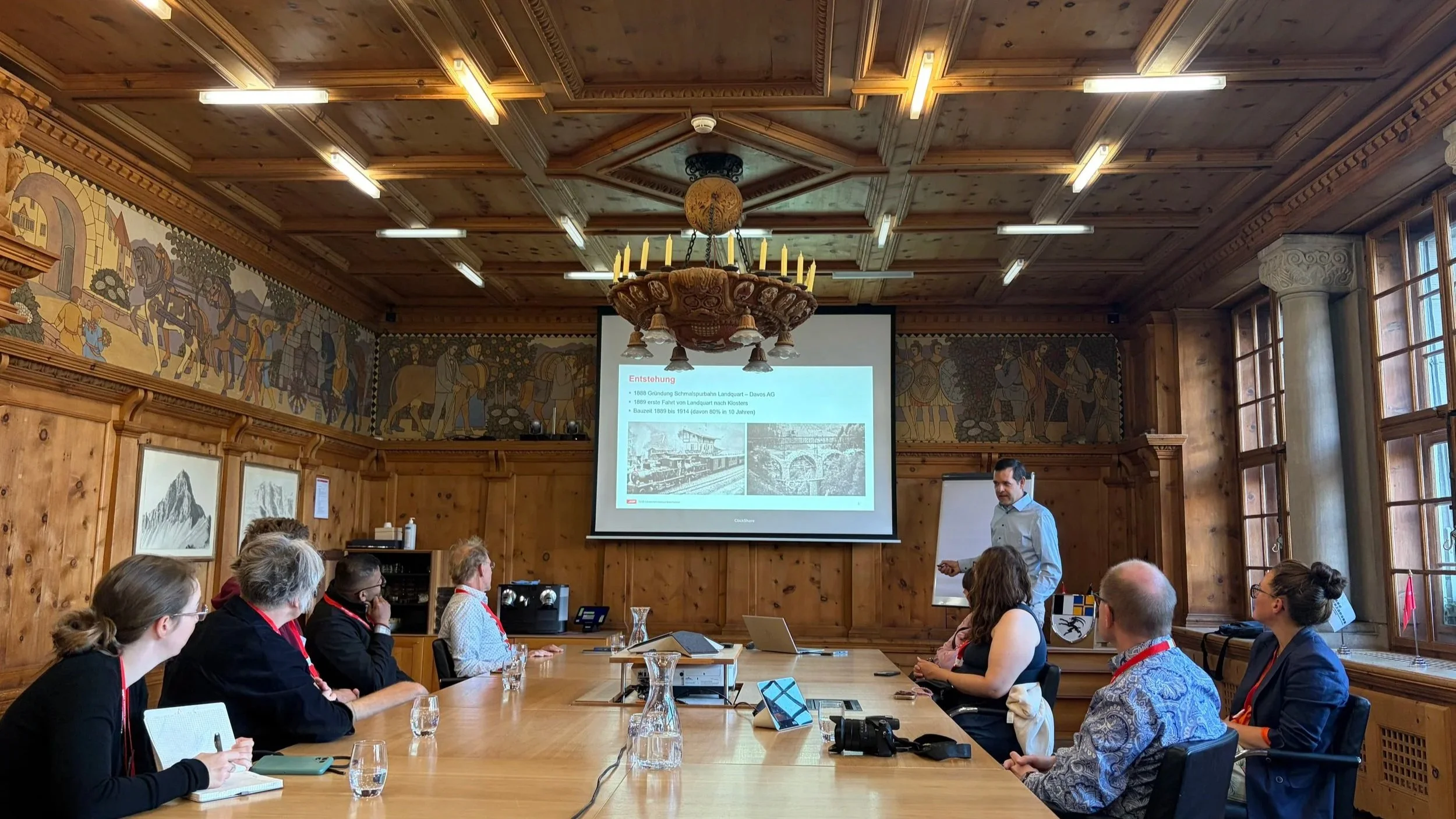
Maintaining a railway in a mountain area can be challenging. Our delegation had the chance to learn about the history of the Rhätische Bahn (RhB), which in 2022 set a world record with the longest passenger train ever operated, almost two kilometres long. This company is involved not only in rail operations but also in station and surrounding area development projects. Station buildings and forecourts are usually owned by RhB rather than by municipalities.
Bike: our tour in Chur
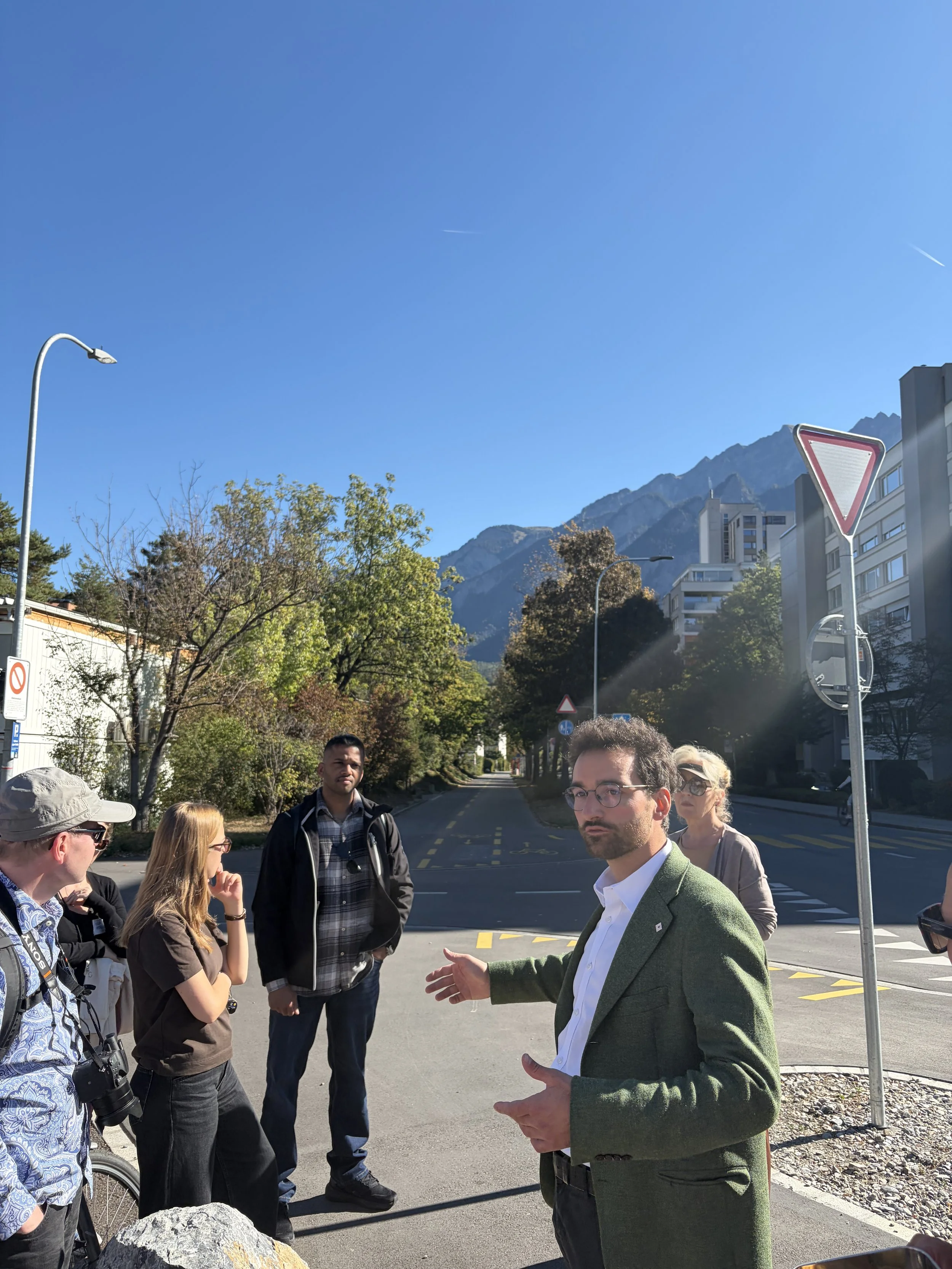
To experience the next mode of transportation, we had the perfect local guide who gave us a tour of the city of Chur: the City Councillor Simon Gredig.
Chur, which describes itself as the oldest city in Switzerland, is a good example of urban redevelopment. The area already reflects many principles associated with today’s “15-minute city” concept. We learned, for example, how Bahnhofstrasse, one of the main streets of the city, was gradually turned into a car and bus-free street, despite considerable opposition. The redesign of the pedestrian zone between the station and Martinsplatz earned the city a recognition award from Fussverkehr Schweiz, the Swiss pedestrian association, in 2017 (Flâneur d’Or).
Later, we visited a visionary neighbourhood ("Laguna-Quartier") developed in the 1970s. It features high-rise buildings with underground parking, which leave the spaces in between green and car-free.
Even though it is not perfect - considering the very large paved areas with very little shade - (Katja Diehl’s blog post, in German, tells more), Chur is a great example of how cities can change for the better.
On foot and by mountain bike: the trails
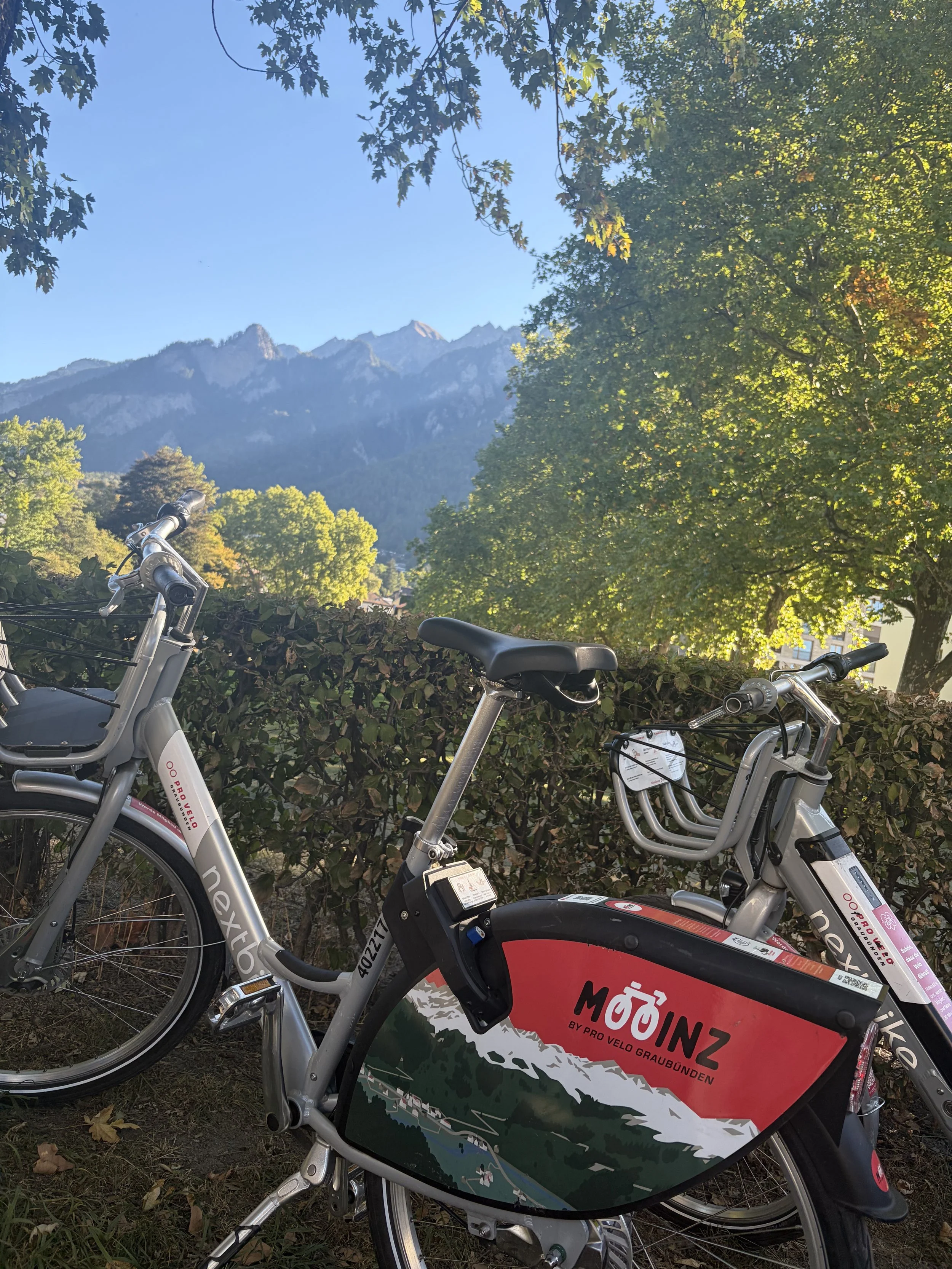
We couldn’t leave without experiencing the oldest mode of transportation: our feet. Graubünden is a very famous area to go hiking, with 11,000 km of trails. But these trails are not exclusive for hikers, they are a popular attraction for mountain bikers as well. The Graubünden Hiking Trails Association, which we had the pleasure of meeting, promotes mutual respect and positive encounters rather than physically separating different user groups. This “Fair Trails” spirit is also part of the local cycling culture.
Lenzerheide shows how intense this shared use can be: good public transport connections, including PostBus buses with bike trailers and a cable car. A single counting station at the top of the bike park records around 140,000 passes a year: every rider goes through it before dispersing onto five different trails. These counters, together with data from platforms such as Strava and Garmin, help identify hotspots and plan transport and visitor management. The approach will be used for the first time in winter operations. There is also a “Learning Lab”, where children and adults practise both technical and social skills: staying on the designated trails, to protect wildlife, is one of the first lessons.
Getting there is more complicated. Most day visitors arrive by public transport, while hotel guests tend to come by car. Travelling with bikes and children is hard for families, one of its key target groups. The mandatory bike reservation did not help: according to customer feedback, even a CHF 2 fee can be a barrier.
Car and services: Viamala Service Station
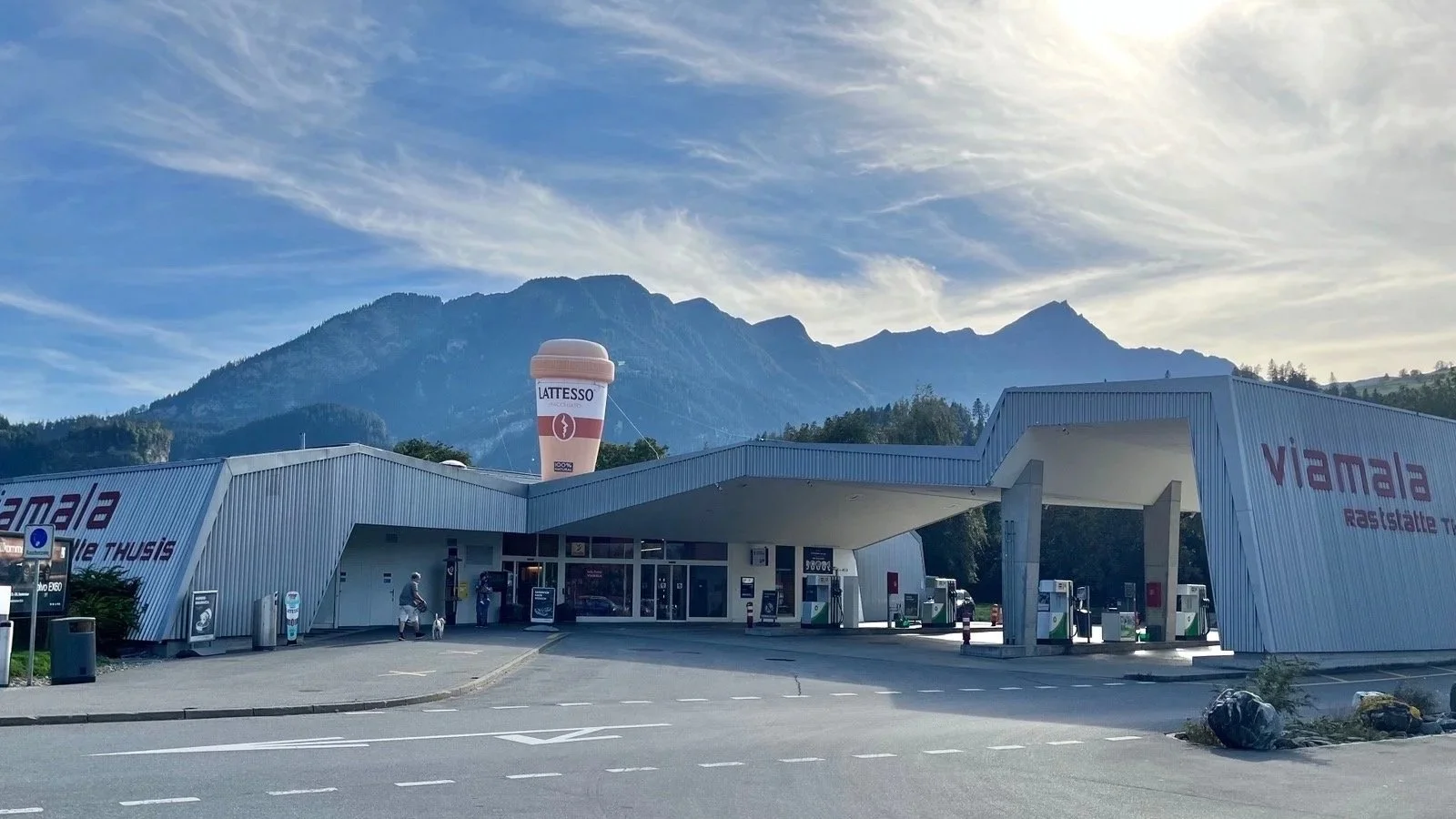
Finally, a story of mobility driven by citizens. We are talking about Viamala Service Station. The project was initiated and realised through a citizen-led initiative: after no applications were received for the construction and operation tender, local businesses formed a joint-stock company within two weeks and implemented the project themselves.
What is even more interesting is its architecture: the founders wanted to create something distinctive and therefore launched an architectural competition. The result is well integrated into the surrounding mountain landscape. This station can be reached by electric cars, thanks to the GoFast charging hub with eight high-power charging points, and by bike, being located directly on a cycling route (bicycle parking facilities are included!).
To wrap it up
Three days and six modes of transport left us with different impressions. Sarah was struck by how connected everything is:
“One of the strongest impressions from the trip was how closely interconnected all mobility-related topics are. Stakeholders across the canton work together effectively, creating a system in which individual initiatives reinforce one another. The region also shows a remarkable willingness to embrace transformation and to adapt early to emerging mobility trends and societal changes. Across all our visits, a common theme emerged: long-term thinking, collaboration and a strong commitment to developing sustainable and user-oriented mobility solutions.” – Sarah
For Tejas, the value of the trip was in the places and, above all, in the people:
“Starting off with the stunning Viamala Gorge and the cable car up to Feldis made for an unforgettable beginning. Experiencing Graubünden’s transport network first-hand – from the iconic PostBus buses and Rhätische Bahn to Chur’s city infrastructure and Bike Kingdom in Lenzerheide – was deeply inspiring. What made it truly valuable was exchanging real-life experiences and fresh ideas with local experts and transport leaders on the ground. Connecting with such a passionate group of professionals made the entire journey a complete highlight!” – Tejas
That said, Graubünden remains car dependent. Data show that 80% of the households own a car, and only 16% uses public transport as a standard way of moving (source).
But it still represents a good example of long-term thinking: all our visits showed this common theme of collaboration and strong commitment as the perfect recipe for developing sustainable and user-oriented mobility solutions.