
From Idea to Impact: YMN Brings Entrepreneurial Thinking to the Classroom at TU Berlin
Did you know that the Young Mobility Network is not only a platform for connecting people - but also for creating knowledge and developing the next generation of mobility innovators?
In 2025/2026, YMN took its mission one step further by co-hosting its first Master’s module at TU Berlin: “From Idea to Impact - Entrepreneurial Thinking in Sustainable Mobility.”
Master Sustainable Mobility · TU Berlin · in cooperation with the Young Mobility Network
The goal was simple: empower students to move beyond discussing the future of mobility and start actively shaping it - by picking up the mindset, methods and modern tools that entrepreneurs use to turn an idea into real-world impact.
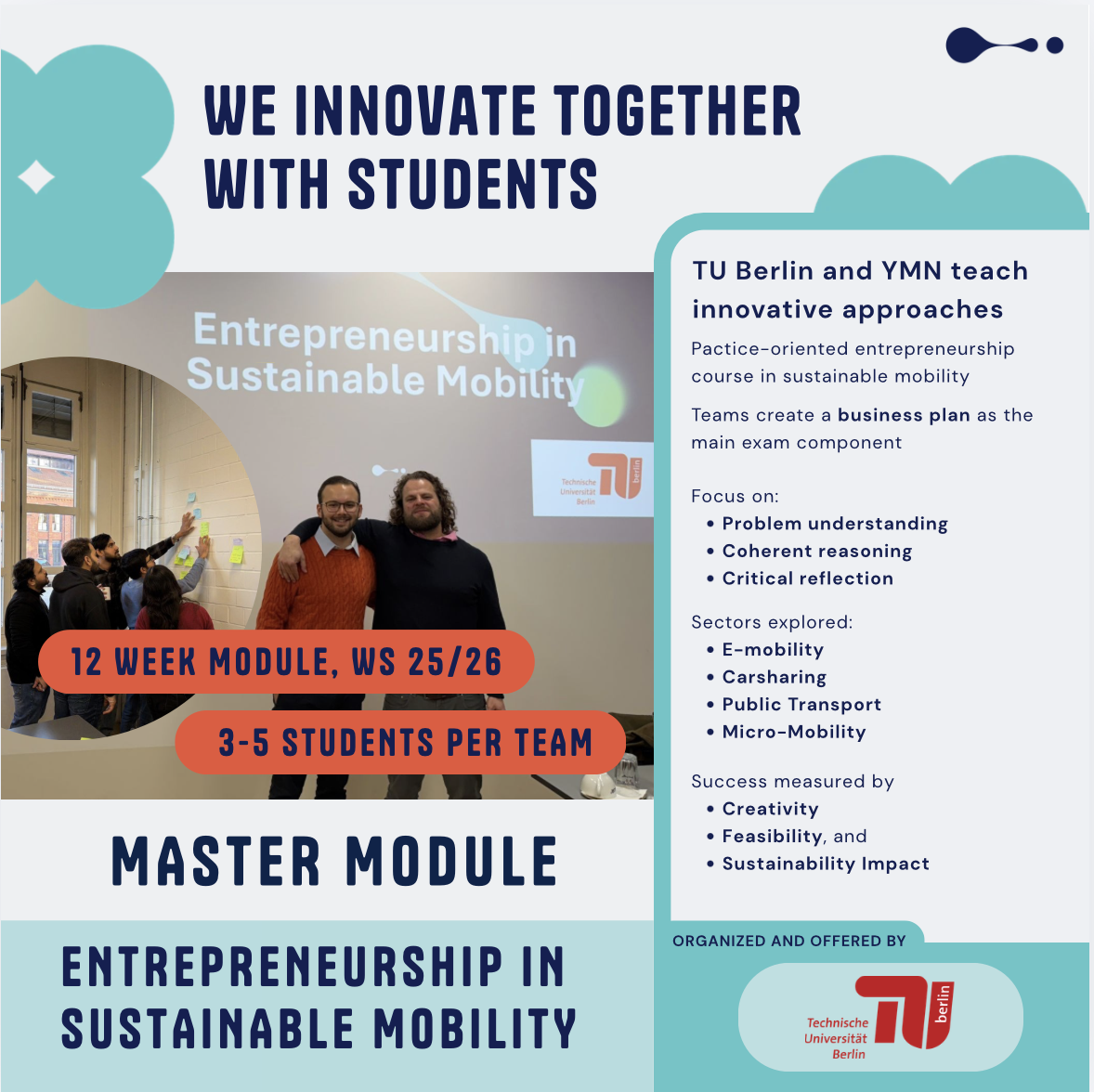
Bringing entrepreneurial thinking into sustainable mobility
The module was designed as an eight-week learning journey for Master’s students in Sustainable Mobility at TU Berlin. But this was not a classic business-plan or venture-capital pitching course. Instead, the focus was on the foundations of entrepreneurship:
• Understanding real-world problems before building solutions
• Developing a strong customer and user perspective
• Creating, testing and challenging ideas
• Building prototypes as learning tools
• Understanding business models and impact
• Communicating ideas effectively
Because successful mobility solutions do not start with technology - they start with understanding people and their needs.
Staying obsessed with the problem, not the solution
If there was one thread running through all eight weeks, it was this: keep the customer’s problem at the centre of everything, and don’t fall in love with your solution too early.
It is a natural instinct - you have a clever idea, you get attached to it, and from that moment on every piece of feedback is filtered through the hope that you were right. Entrepreneurial thinking asks for the opposite discipline. We pushed students to keep returning to a few uncomfortable questions: Whose problem are we actually solving? How well do we really understand it? And is the solution we love the one the customer actually needs?
Teams were encouraged to treat their first idea as a hypothesis rather than a plan - something to be tested, stress-tested and, if necessary, thrown away. That customer-first orientation is what separates a solution looking for a problem from a solution that genuinely earns its place in the market.
From idea to impact: the journey
Over eight full workshop days, students worked in teams and developed their own mobility concepts. The course structure:
-
Building teams and exploring what entrepreneurial thinking really means. We kicked off with a guest speaker: Lucas Weidner, Co-Founder and Head of Product at encore I DB, who shared honest, practical insights into building products people actually want - from staying close to the customer to knowing when to change direction. A big thank you to Lucas for setting the tone for the module.
-
Learning how to identify meaningful problems - and how to tell a real pain point from a nice-to-have by getting close to actual users.
-
Turning insights into innovative concepts, generating many options before committing to one, and actively challenging each idea against the problem it claims to solve.
-
This was one of the most hands-on weeks of the module. The purpose of a prototype was to learn — not to rush a half-baked product onto the market. We treated prototypes as cheap, disposable experiments: build something rough, put it in front of users, and let real feedback — not opinion — decide what happens next.
A lot of the week was spent building prototypes and then deliberately challenging them: What assumption does this rest on? What would have to be true for it to work? What did the last round of feedback just tell us to change?
We also put modern rapid-prototyping tools directly into the students’ hands — including AI-assisted “vibe coding,” where you describe what you want in plain language and let AI tools generate a working first version. Tools like these collapse the distance between an idea and something tangible you can test, so even non-technical teams could stand up a clickable mock-up or a simple working demo in hours rather than weeks. We spent time discussing where these tools genuinely accelerate learning - and where a quick sketch or a paper prototype is still the smarter, faster choice.
-
Learning from real entrepreneurial experiences - hearing first-hand what it takes to turn an idea into a venture.
-
Connecting ideas with value creation - and with measurable environmental and social impact.
-
Transforming ideas into compelling, well-structured stories.
-
Presenting concepts to an expert jury.
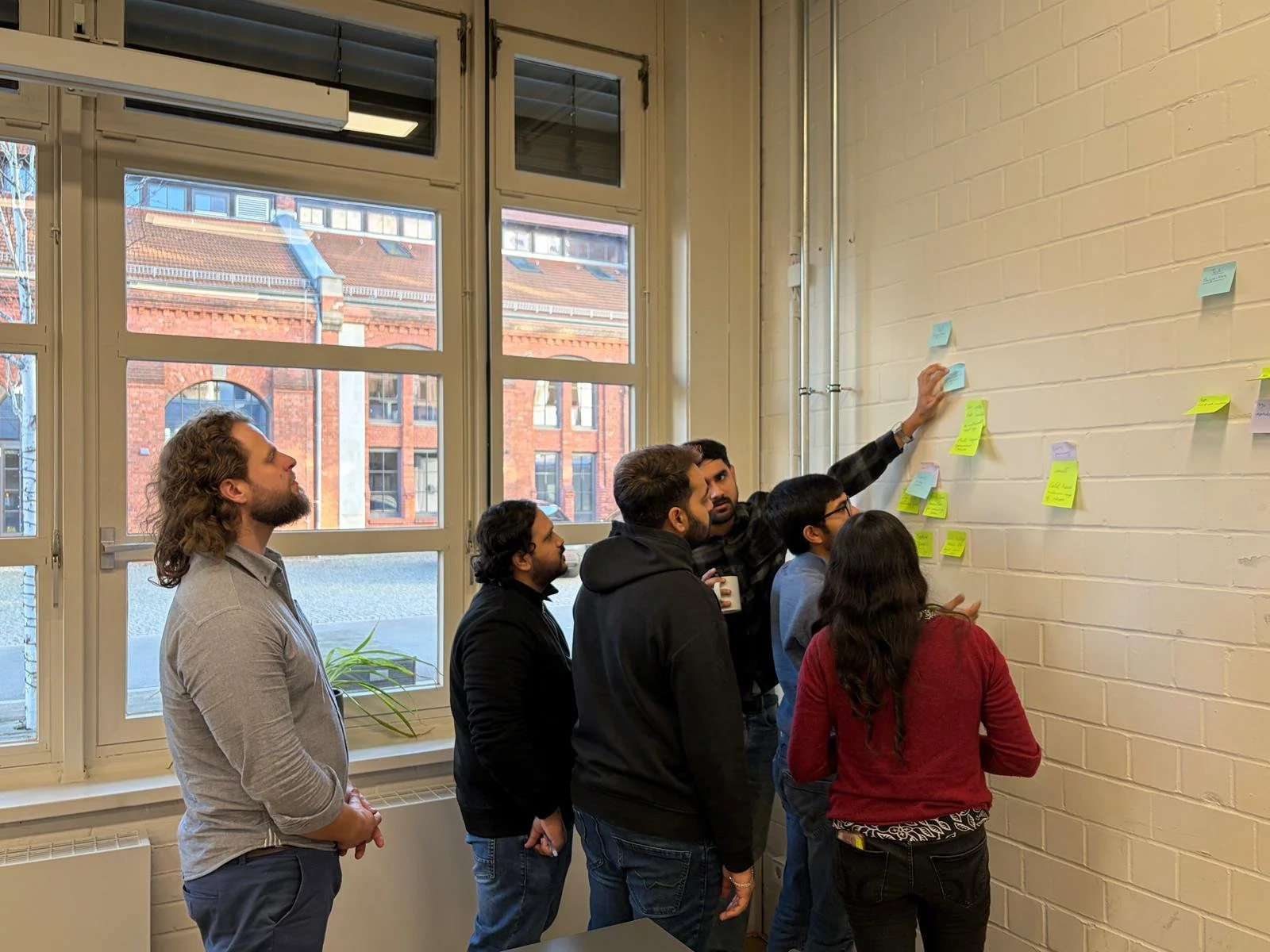
Working on the ideas!
Learning by doing
One of the biggest lessons for the students was simple but hard to accept in the moment: great ideas change.
Several teams completely transformed - or even abandoned - their initial ideas after speaking with users and testing their assumptions. And that was exactly the point. So much of the module was built around prototyping and challenging ideas: putting a rough version in front of real people, listening carefully, and being willing to let go of a concept the moment the evidence pointed elsewhere.
Entrepreneurial thinking is not about proving your first idea is right. It is about learning, adapting and creating solutions that truly solve problems.
Throughout the module, students developed skills in:
✅ Problem framing
✅ User research and interviews
✅ Value proposition development
✅ Prototyping — including with modern, AI-assisted tools
✅ Sustainable business thinking
✅ Impact assessment
✅ Storytelling and pitching
The final assessment combined a pitch presentation with a written business concept — focusing on entrepreneurial thinking, not entrepreneurial success.
Powered by the YMN community
The course was led by Max Beitler - entrepreneur, consultant and lecturer - with support from YMN members Matthias Carl Lauer, Vipul Toprani and Anna Filby.
Together with TU Berlin, YMN brought practical experience, startup insights and industry perspectives directly into the classroom. This is exactly what YMN stands for: connecting people, sharing knowledge and creating opportunities for the next generation of mobility leaders.
The highlight: Final pitches in Berlin
The programme concluded with a final pitch event in February 2026, where students presented their concepts to an expert jury. The jury included Entrepreneurs, Advisors and Startup Experts.
The discussions, feedback and ideas showed one thing clearly: the next generation of mobility innovators is already working on tomorrow’s challenges.
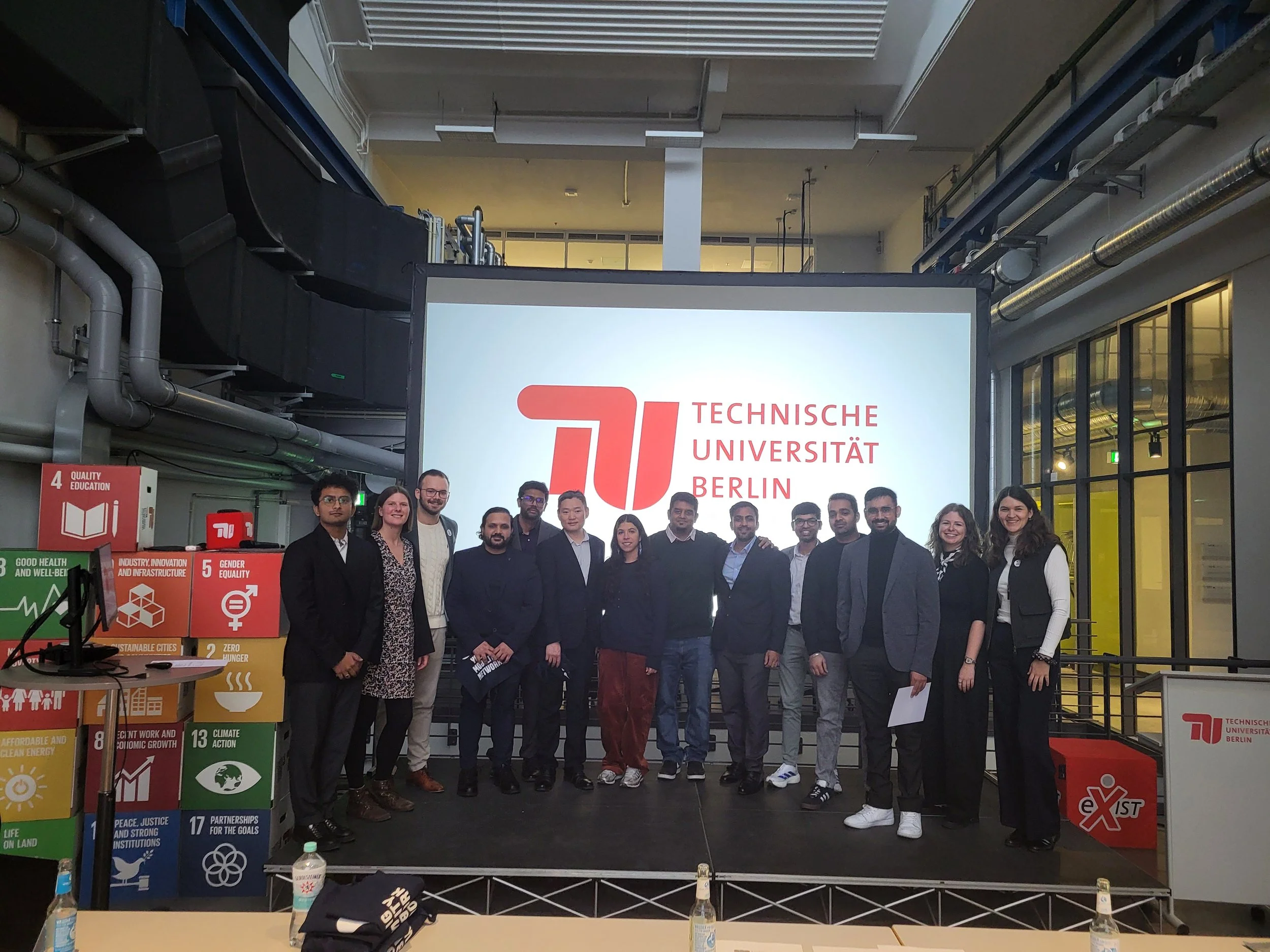
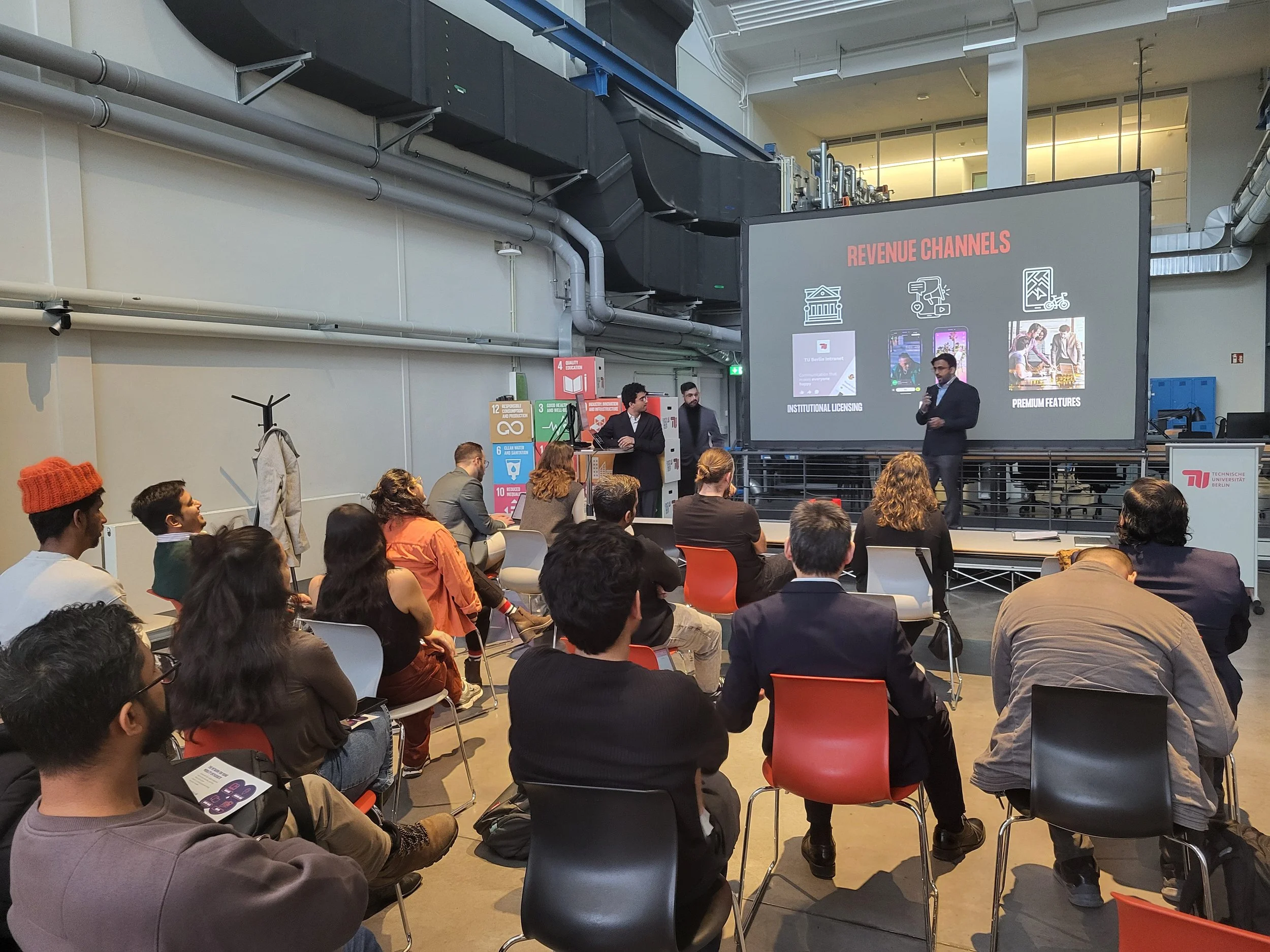
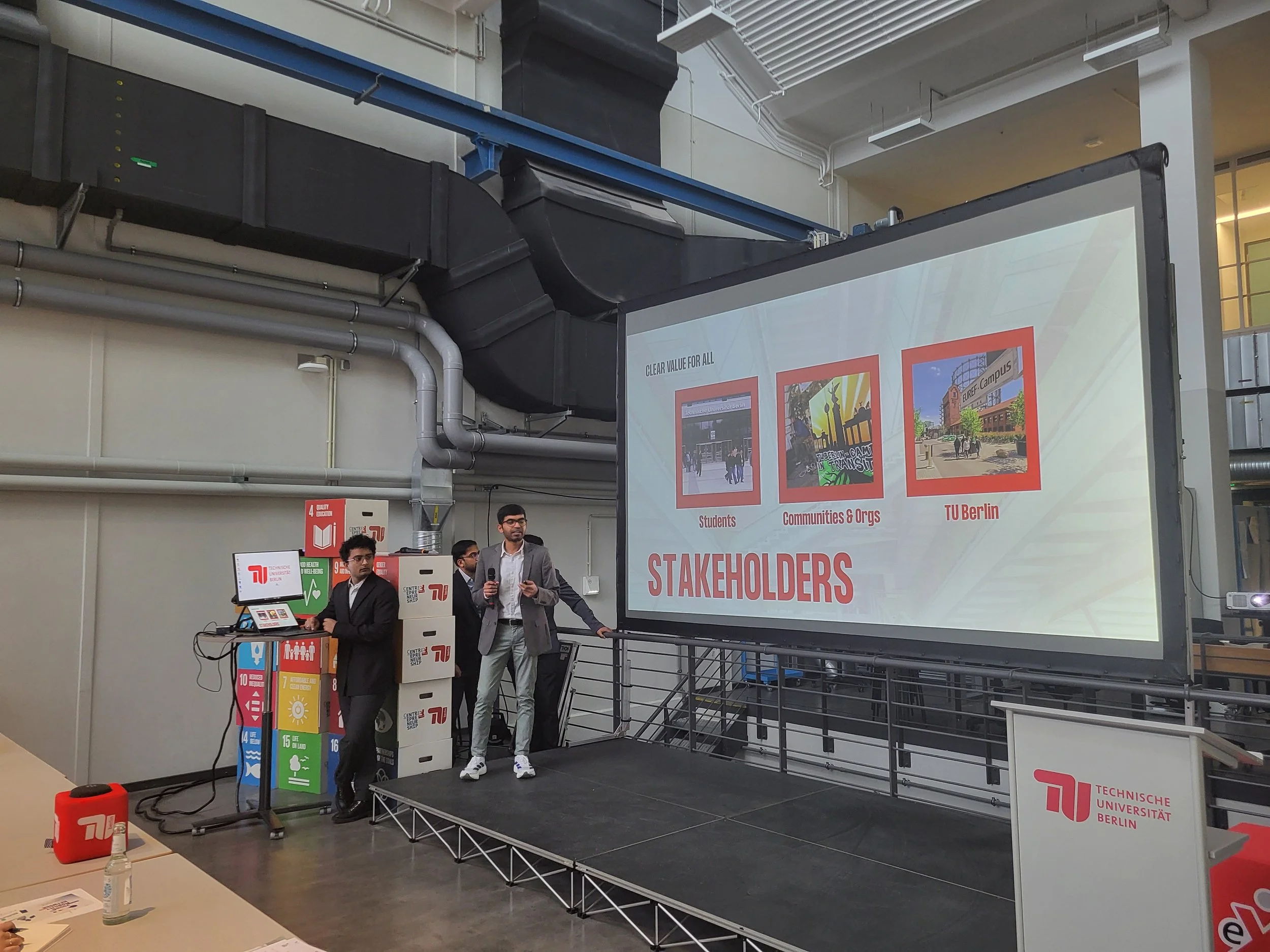
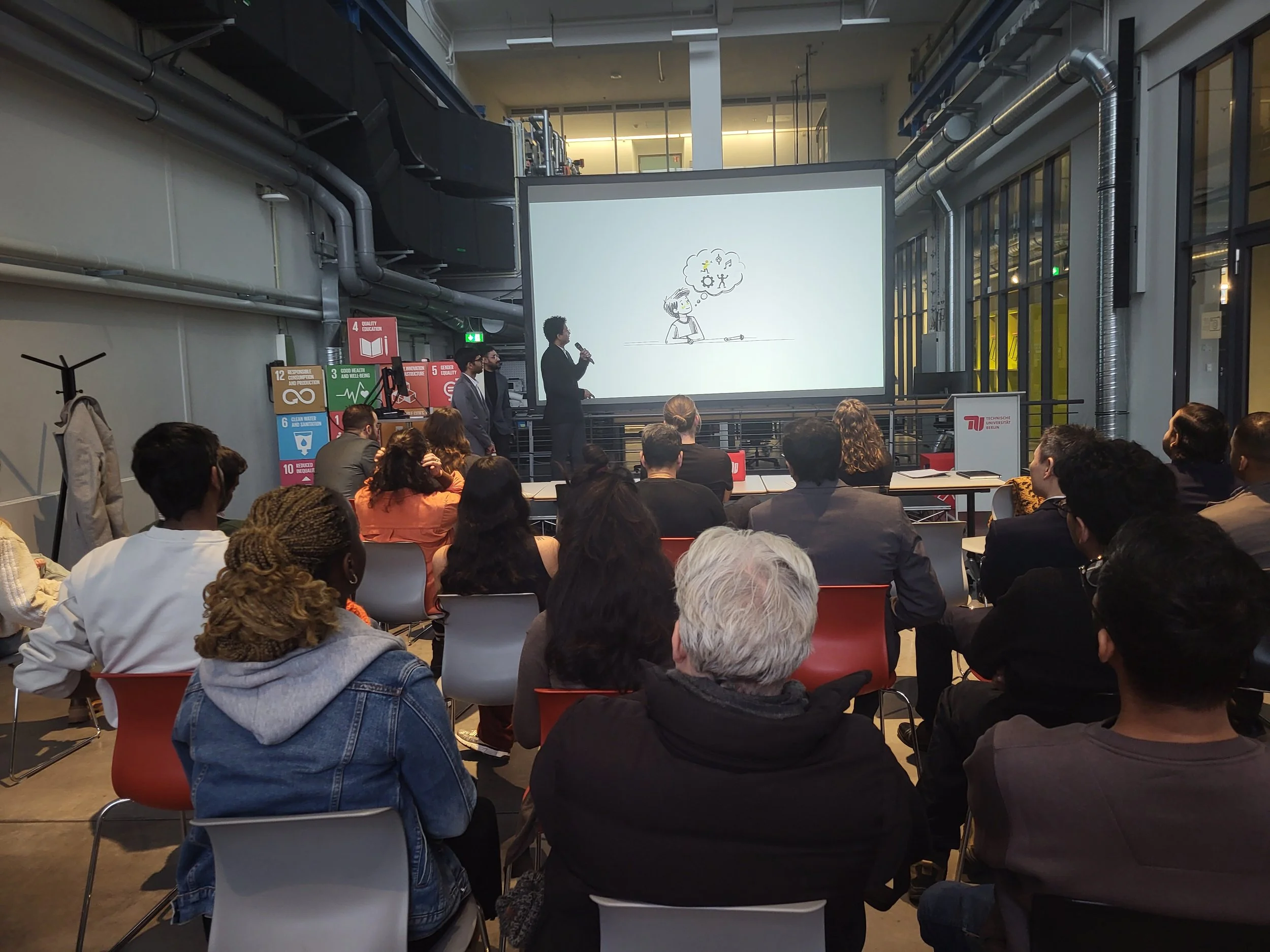
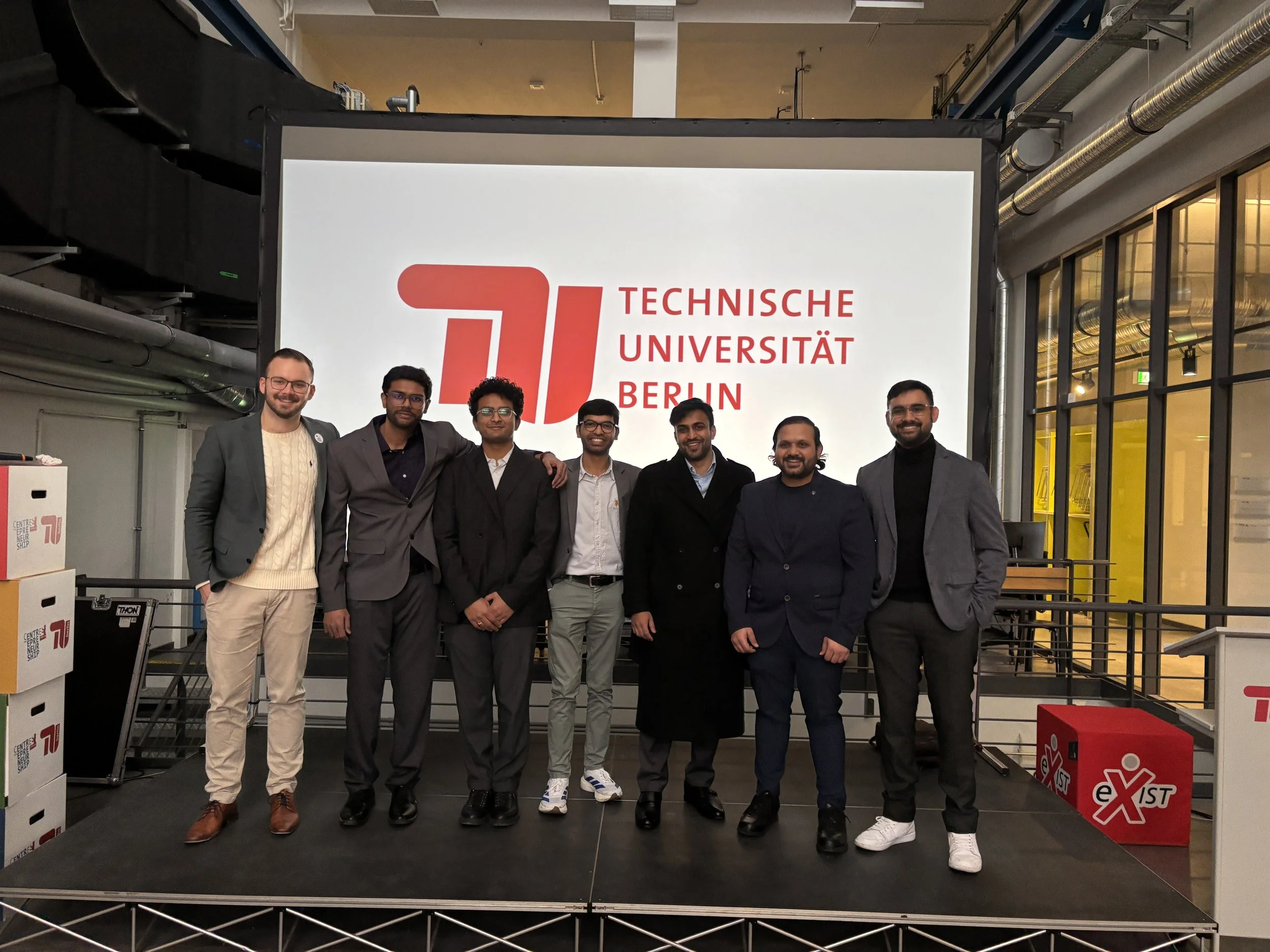
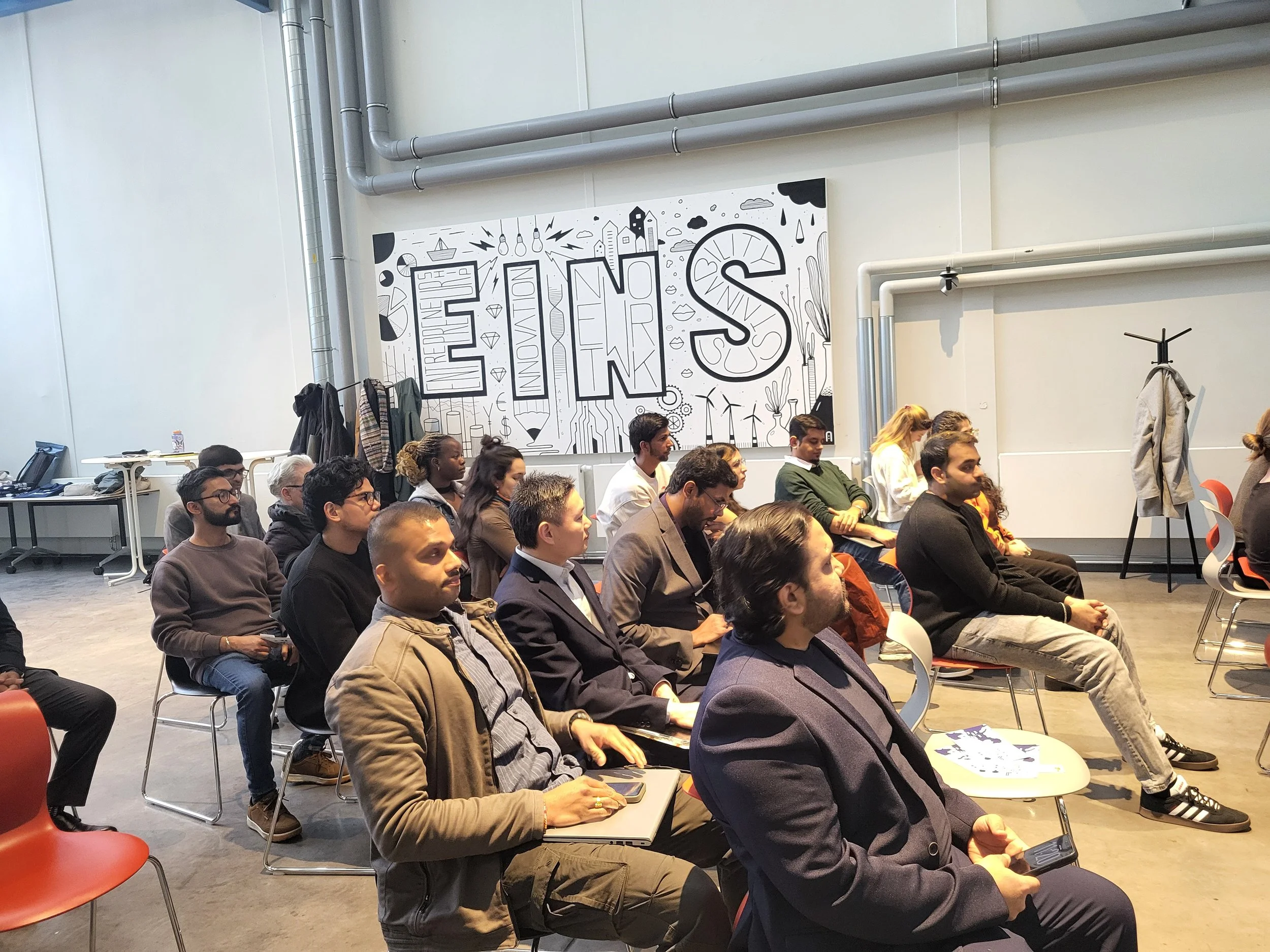
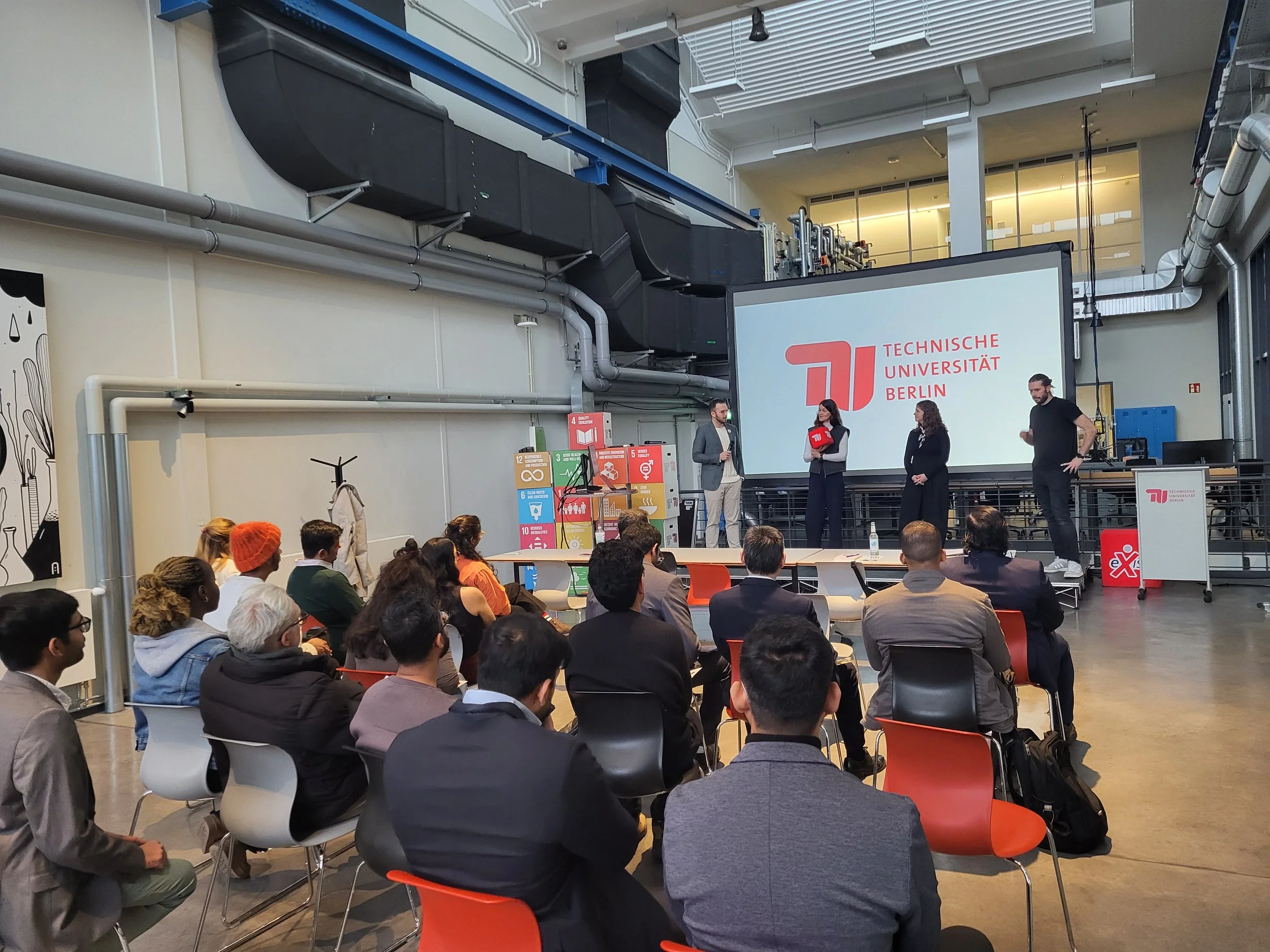
The final concepts showed just how differently a single brief can be interpreted once teams start from a real problem rather than a favourite solution.
MOVIA tackled the everyday frustration of unreliable public transport, designing a tool that pairs each journey with a pre-calculated backup route so travellers spend less energy second-guessing their options.
Pulse turned its attention to the fragmented flood of campus information, proposing a single hub that gathers scattered activities and events into one place.
PureRoute reframed navigation around health, guiding runners along cleaner-air routes and imagining how that same data could one day inform how cities are planned.
What tied the ideas together was not their polish but their starting point. Each began with a clearly evidenced need, was tested and challenged against real users, and stayed honest about its open questions, exactly the kind of problem-first, prototype-driven thinking the module set out to build.
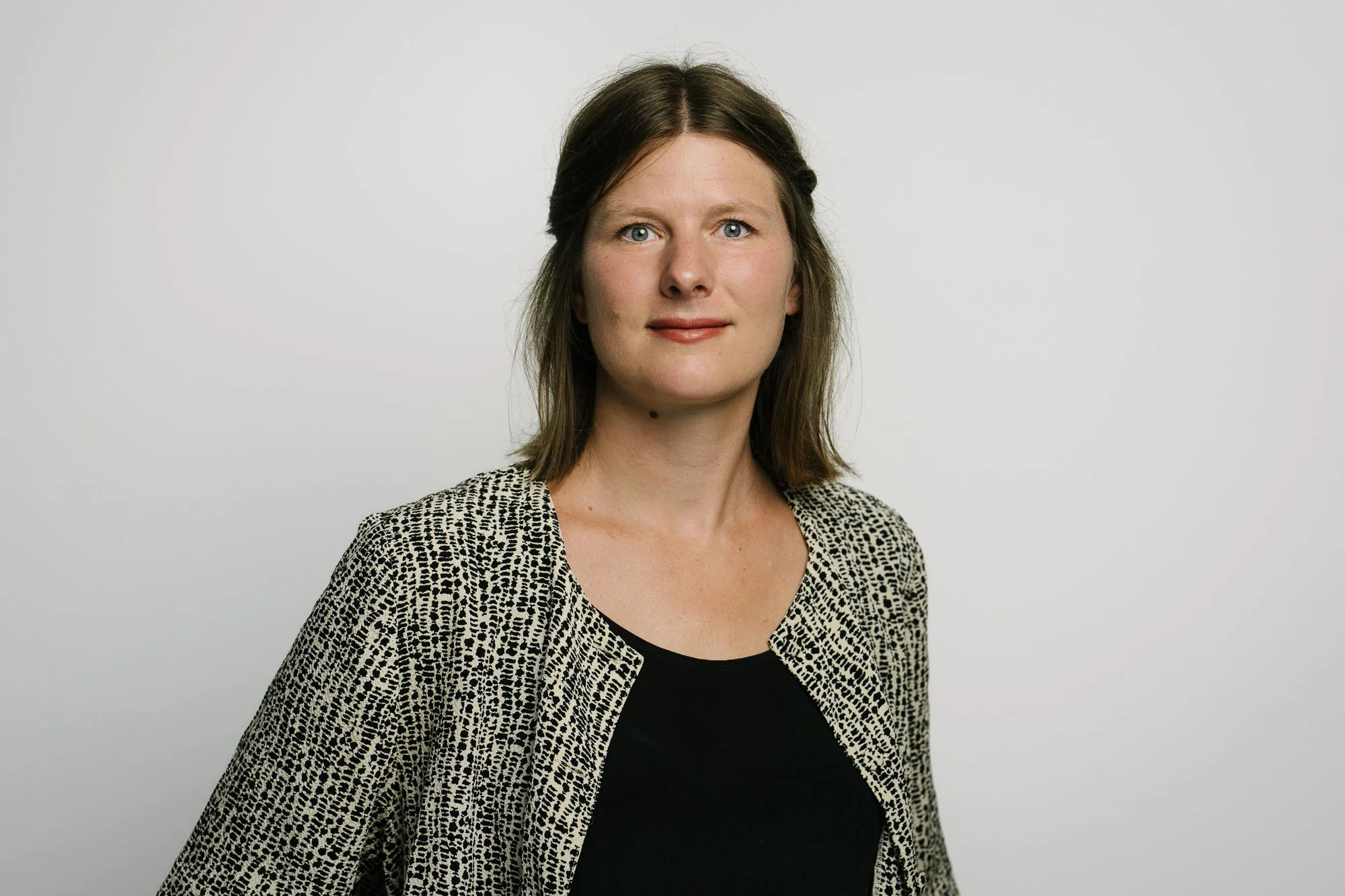
“The MBA in Sustainable Mobility Management brings together participants from different industries, cultures, and countries, creating an international learning environment. With its strong focus on practice and application, the program connects academic knowledge with real-world mobility challenges and industry needs. It is valuable for young professionals and those new to the mobility sector, providing a strong foundation of knowledge, opportunities for exchange with peers, and access to a diverse professional network. Participants not only gain valuable expertise in mobility but also build connections that foster collaboration and support their career development beyond the classroom.”
— Nora Bonatz, Research Associate, TU Berlin
Looking Ahead
At YMN, we believe a network is more than a place to meet people - it is a place to learn, create and make an impact.
The TU Berlin module is just the beginning of how we want to bring our expertise, community and industry connections into education. We're excited to continue supporting the programme again this year and to further strengthen the entrepreneurial mindset of future mobility professionals.
This is only the start of our collaboration with TU Berlin, and we look forward to shaping and expanding it together in the years ahead. Because the future of mobility will be shaped by those who are empowered to build it.
Interested in collaborating with YMN on education, innovation or talent development? Get in touch.