
What happens when mobility experts, industry and young professionals tackle a real district’s challenges in a single afternoon?
Our case study focused on Gateway Gardens: a modern district in Frankfurt. It is a perfect example of urban redevelopment: a former US military site that is now a modern business district. Being located next to Frankfurt Airport, the Gateway Gardens rises mobility questions: How do employees get to work reliably? How do international visitors find their way? How can existing services work better together?
The Young Mobility Network and the House of Logistics and Mobility (HOLM) took these questions out of the conference room and into the district itself. In “Next Stop Gateway Gardens: An Interdisciplinary Workshop on Multimodal Mobility,” experts, industry representatives and mobility enthusiasts worked on them to create a mobility prototype.
>> Read also: Next Level Mobility: Tackling Corporate Mobility Challenges at 40°C
The method: to design a mobility system, you need to see it with your eyes first
We started working in the field, walking through the district, putting ourselves into someone else’s shoes. The best way to plan cities, neighborhoods and mobility networks is to consider different types of users. What would a commuter need to reach this district easily? What about someone working in shifts? We asked ourselves these questions while walking around the Gateway Gardens.
Back in the workshop room, our design thinking coach Matthias Lauer guided the teams through human-centered design methods. Each team had to define a focus problem, develop a solution concept and sketch a business model, weighing user needs, technical feasibility and economic viability at every step.
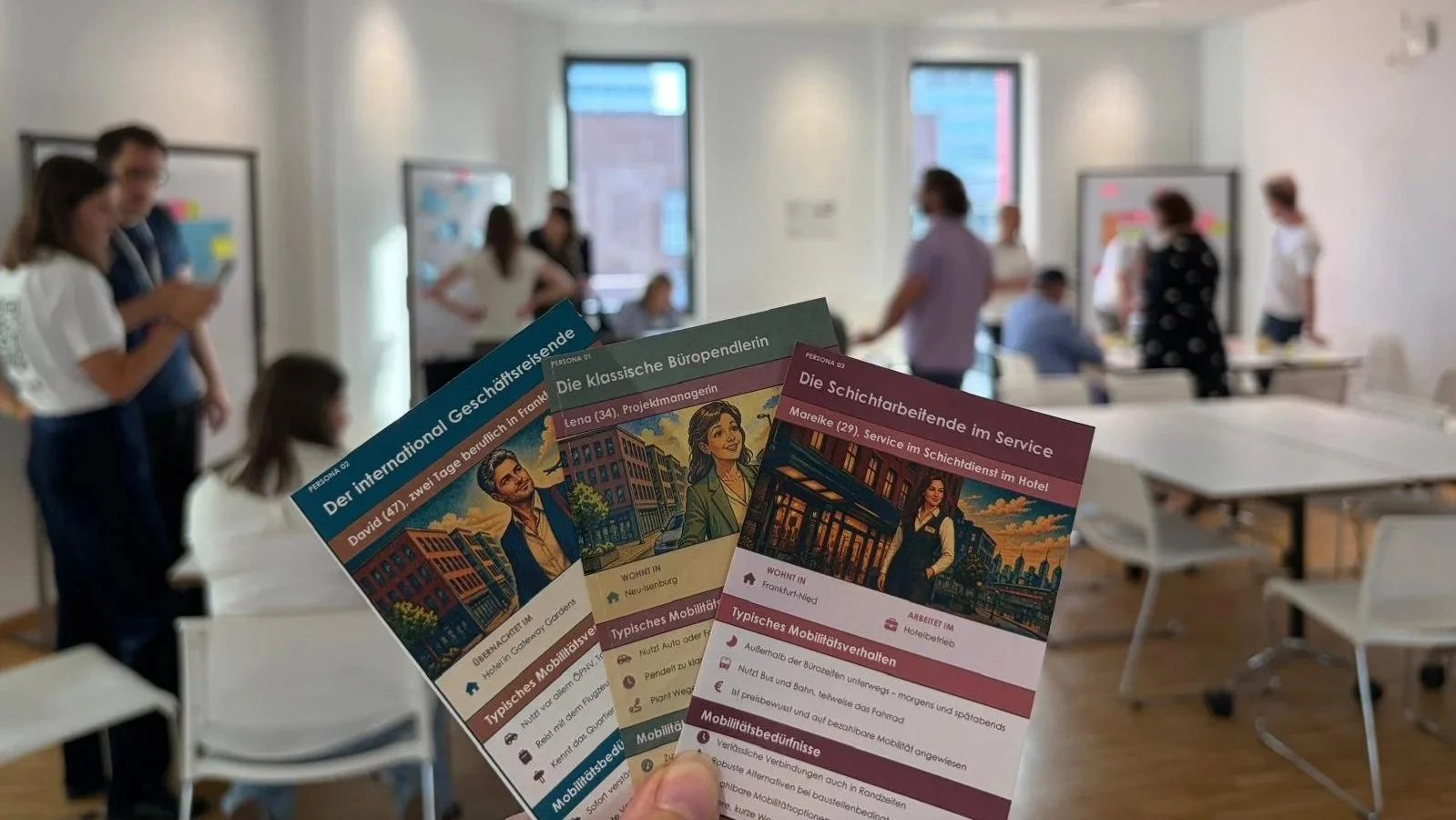
Three personas, three problems, three solutions
Case 1: Mareike, the commuter who must transfer
Question: How can Mareike commute safely and reliably, even though she has to transfer at least once?
What we noticed: Transfers make the journey less reliable and less comfortable. The first and last mile are only loosely connected, schedules don’t fit shift work, carpooling options are scarce, and the quality and safety of stops and stations raise concerns.
The solution: Gateway GO. An app that bundles all commuting options (public transport, car, bicycle and more) and uses matchmaking to connect travelers. It could be integrated with RMVgo. Local employers act as partners, and passengers share the costs of vehicle-based trips (guideline: about €0.30 per kilometer).
Why it matters: It closes gaps in the public transport network, especially on the first and last mile and outside peak hours. It also uses existing capacity better, reduces CO₂ emissions and strengthens employer networks.
Case 2: David, the business traveler who can’t find his way
Question: How can David have the smoothest possible arrival and departure during his two business days in Frankfurt, despite missing wayfinding information?
What we noticed: Clear signs and maps are missing at the S-Bahn station, and construction hides the S-Bahn entrance at HOLM. Bus platforms are not clearly marked, escalators are often out of service, and the park route is not fully visible in Google Maps. Some routes have barriers, and information is not accessible to international travelers, as it is often written only in German. We have also found out that responsibility for streets and the park is fragmented among different actors.
The solution: The team focused on “information and signage” and proposed a modern system to give directions with dynamic digital screens. The information can be updated at any time and shown in several languages, and hotels are color-coded for easier navigation. A QR code with Wi-Fi access near the S-Bahn station gives international visitors without mobile data an overview of hotels, restaurants and supermarkets. A dedicated Gateway Gardens app would add maps and navigation.
Why it matters: The first minutes of a visit shape the impression of a whole district. Clear, current, multilingual information is a low-barrier way to improve it.
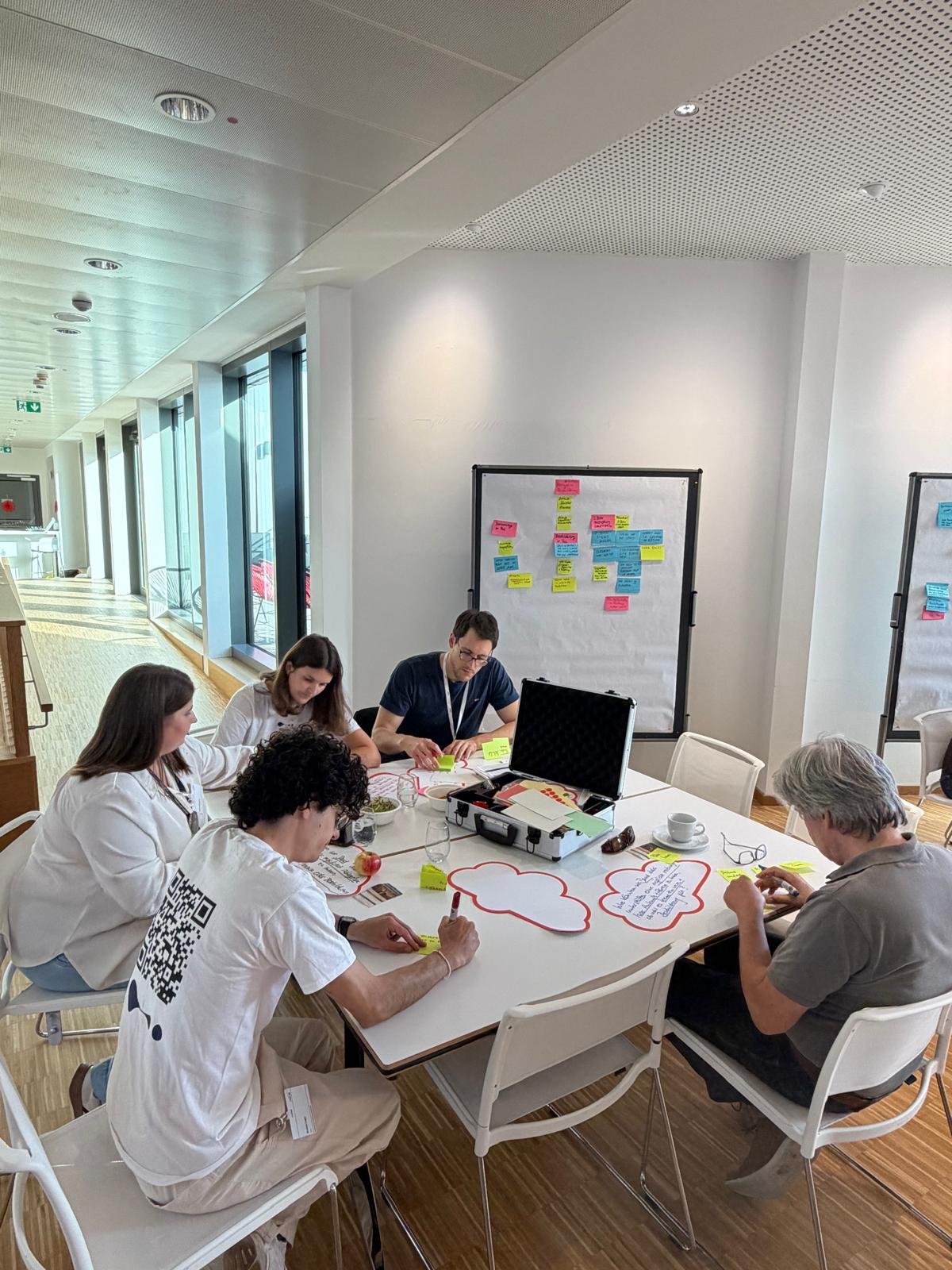
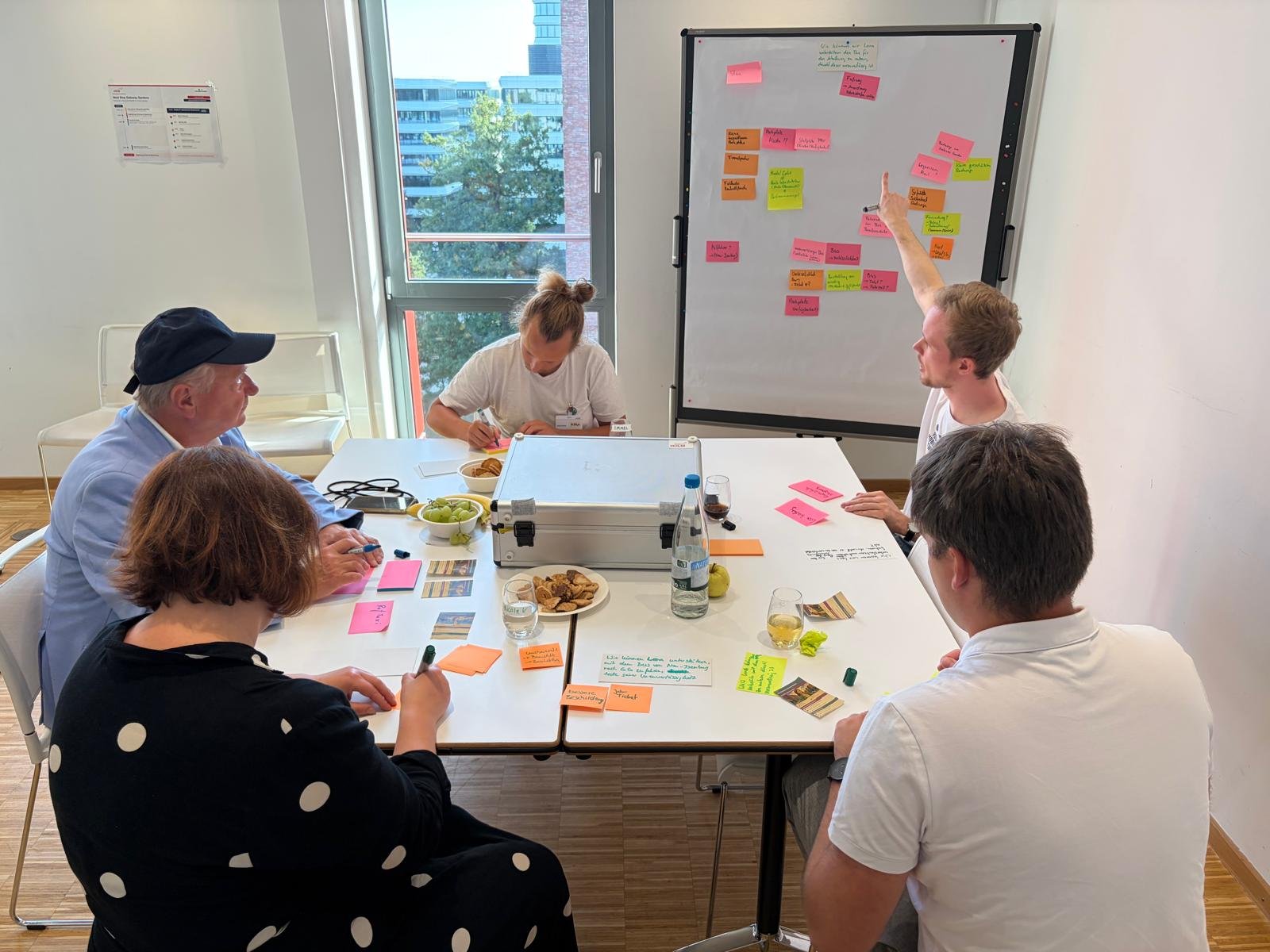
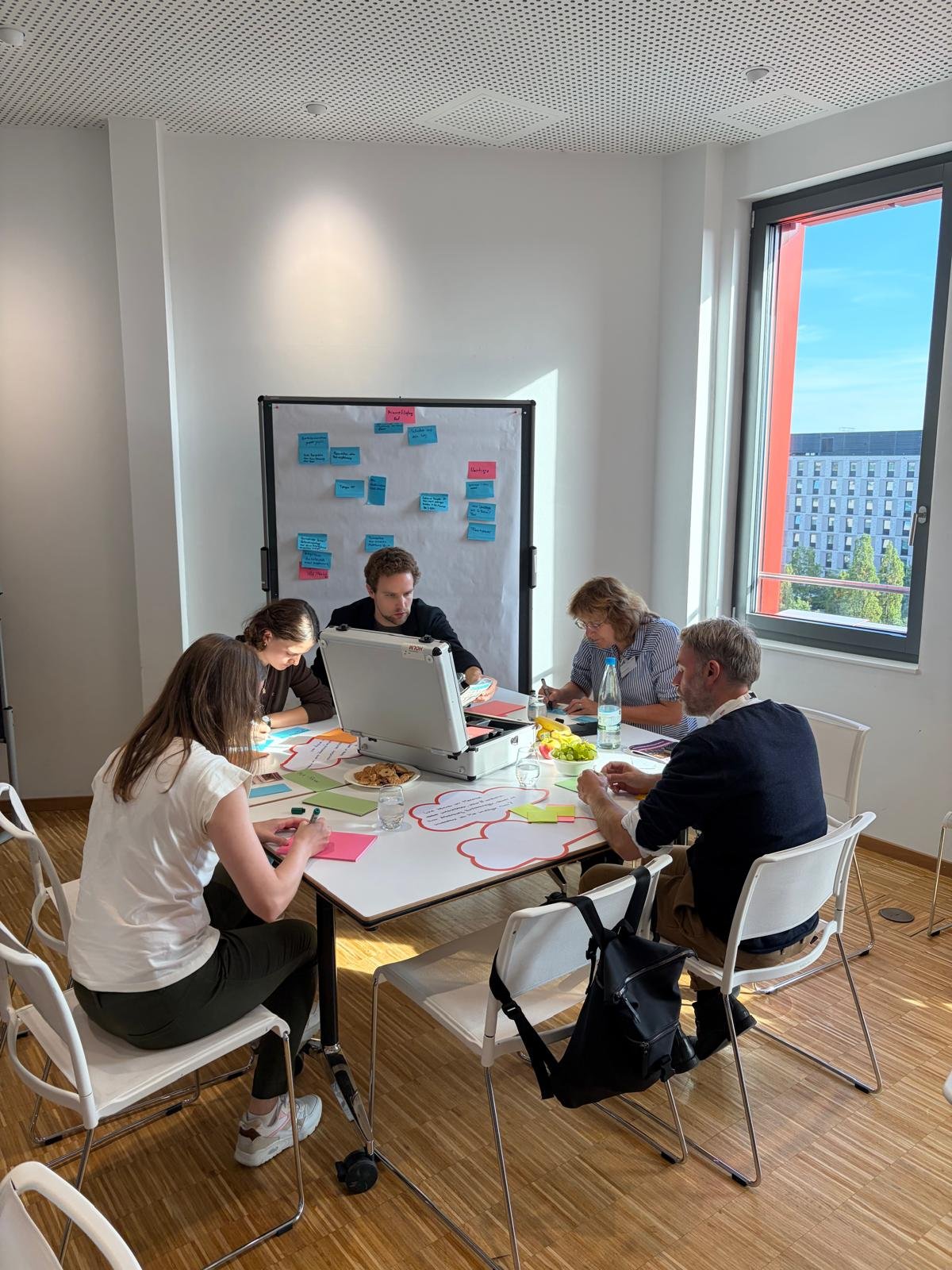
Case 3: Lena, the office commuter who doesn’t trust the bus
Question: How can we encourage Lena to use the bus for her commute, even though she perceives it as unreliable?
What the team found: Lena, a project manager from Neu-Isenburg, drives or cycles to Gateway Gardens. The X17 bus is a viable alternative in principle, but when a bus is cancelled or badly delayed, she has to find a way to work on her own. With a private car, she doesn’t face that uncertainty.
The solution: an automated mobility guarantee. Passengers register in advance via an app for the connection they plan to take. If it is cancelled or significantly delayed, they automatically receive an alternative, such as a taxi or private ride-sharing. An intelligent backend groups passengers with the same or nearby destinations, assigns suitable transport and minimizes detours. The control center only has to approve the process.
Why it matters: The team saw the real innovation in the backend, which connects passenger information, disruption data and alternative mobility providers. Public transport, in this way, can offer a proactive solution instead of leaving passengers to find a solution on their own.
What the case shows about mobility
What should planners consider when designing a transport system people actually want to use? That is the key question for any mobility planner. Looking at the three examples we worked on during our workshop, a few patterns already emerged.
Reliability and orientation decide whether people switch. Whether the issue was transfers, missing directions or delayed buses, people choose the option they can trust.
Integration beats isolated services. The ideas discussed during our meeting shared a common thread: connecting existing services more closely, like a combined commuting and ride-sharing app, is what really makes a difference.
Digital tools work best when they fix a concrete, observed problem. Each concept started from something participants had actually seen on the walk. We need to experience real-life needs first-hand.
Conclusion
This workshop, like many other YMN projects, shows how young professionals can count on a network that helps them learn from real-life cases and see the difference between traditional transport planning and sustainable urban mobility planning. The Guidelines for Developing and Implementing a Sustainable Urban Mobility Plan define a Sustainable Urban Mobility Plan as "a strategic plan designed to satisfy the mobility needs of people and businesses in cities and their surroundings for a better quality of life. It builds on existing planning practices and takes due consideration of integration, participation, and evaluation principles."
Rather than treating transport planning as a mere list of administrative tasks and infrastructure projects, a sustainable urban mobility plan starts from real needs, such as people traveling to work. It integrates the development of all transport modes and involves stakeholders and citizens from the start.
Our workshop reflected all of this, and it added one more positive experience for the young professionals of the future.
If you would like to take part in this journey with us, visit our website and get in touch to find out how to join the network!